- Packing Station and Farmers Hideout delivery loops
- Bulky cargo that must stay physically restrained
- Known road routes with repeatable turns
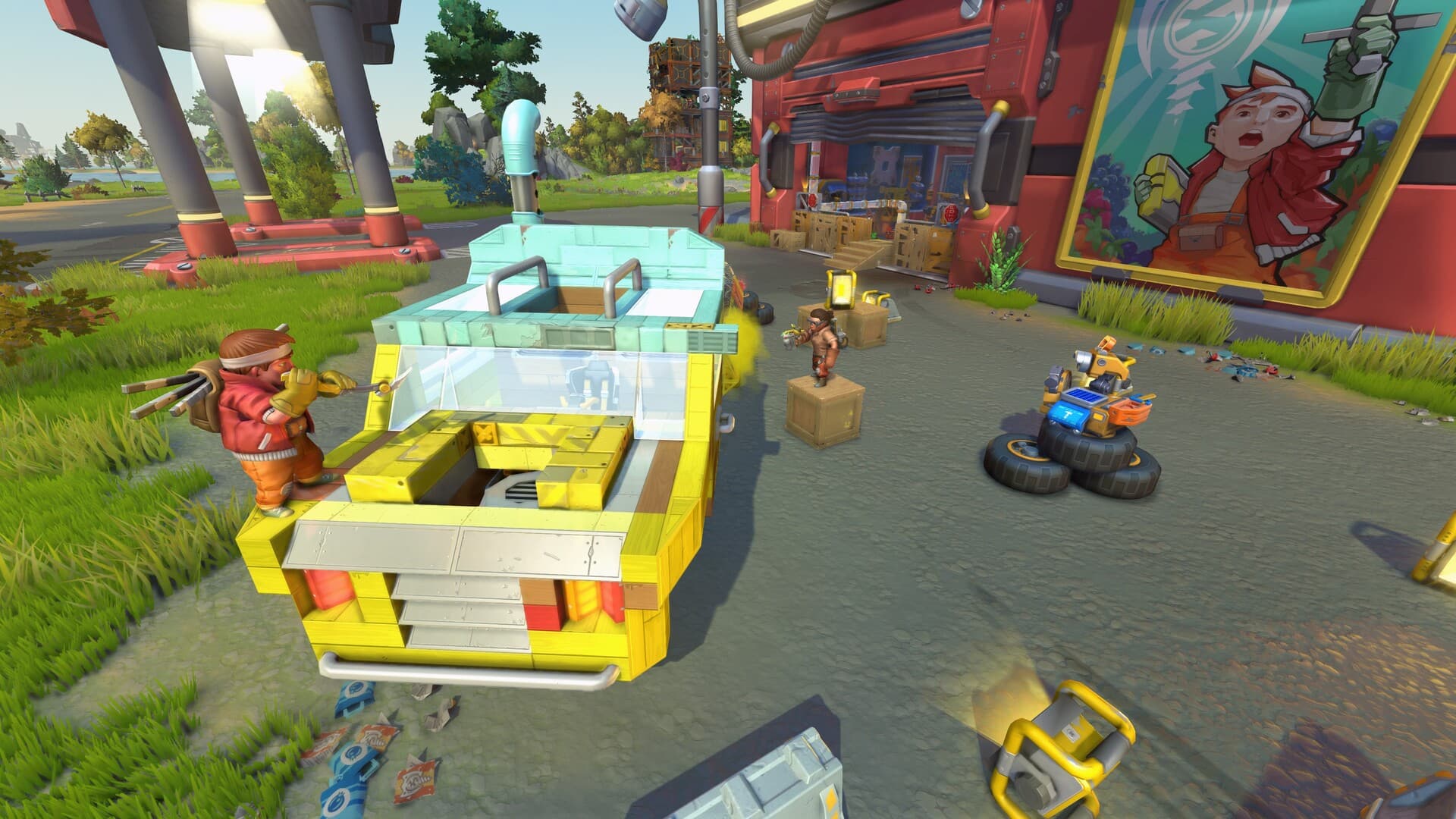
Workshop blueprint / HAU-07
Cargo Hauler - Packing Station Delivery Vehicle
A low-deck six-wheel delivery truck sized around packed produce, safe restraints, and the complete route to the trader.
Intermediate45–70 minutes1 mechanicVersion 1.0
- The cargo envelope has not been measured
- The route requires narrow off-road gaps
- The deck sits above most heavy components
Workshop baseline
Use these dimensions and targets for the first working version. They are a practical starting layout, not a fixed in-game preset; adjust them only after the baseline passes its tests.
Plan the craftable parts →- 01Footprint
- 14 × 26 blocks
- 02Deck
- Between the axles
- 03Wheel layout
- 6 wheels / front steering
- 04Restraints
- Front, sides, removable rear
- 05Suspension
- Tune with normal cargo
- 06Route reserve
- Fuel for delays and return
02 / Prepare the bench
Part manifest
The quantities below describe one baseline build. Optional parts are marked so you can prove the working system before spending on lighting, storage, or automation.
PartQtyJob in this buildPriority
Direct crafting cost
This total multiplies each listed part by its preferred Craftbot or Mechanic Station recipe. Processed materials and block recipes are shown as direct inputs instead of being expanded into every earlier production step.
- Craftable part types
- 8/8
- Station time
- 5m 35s
- Input types
- 10


140 neededMetal Block Level 1
Craftbot14 batches · 1m 10sAvailable from the start
Scrap Metal Block × 280

6 neededWheel
Craftbot6 batches · 1m 30sAvailable from the start
Wood Block Level 1 × 120Metal Block Level 1 × 30Beeswax × 18

8 neededBearing
Craftbot8 batches · 40sAvailable from the start
Metal Block Level 1 × 8

6 neededOff-Road Suspension Level 1
Craftbot6 batches · 1mAvailable from the start
Metal Block Level 1 × 120Component Kit × 6Crude Oil × 12

1 neededDriver's Seat Level 1
Craftbot1 batch · 30sAvailable from the start
Metal Block Level 1 × 20Component Kit × 2Circuit Board × 1Cotton × 10

1 neededGas Engine Level 1
Craftbot1 batch · 30sAvailable from the start
Metal Block Level 1 × 20Component Kit × 5Circuit Board × 1Crude Oil × 5

1 neededSwitch
Craftbot1 batch · 5sAvailable from the start
Metal Block Level 1 × 1Circuit Board × 1

2 neededHeadlight
Craftbot2 batches · 10sAvailable from the start
Metal Block Level 1 × 2Glass Block × 2Circuit Board × 2Glue × 2
04 / Build in testable systems
Construction sequence
Do not place the next system until the checkpoint under the current stage is true. That keeps steering, motion, power, and storage failures separate.
01
Build the cargo envelope first
Reserve space for the largest normal load before the cab is shaped.
- Mark the deck between the axles.
- Represent the widest and tallest load with temporary blocks.
- Add front and side restraints around that volume.
02
Prove the empty route
Measure turns, slopes, and repair pull-offs without valuable cargo.
- Drive to the Packing Station or trader empty.
- Record the narrowest turn and steepest approach.
- Confirm the rear restraint can open at the destination.
03
Tune with disposable weight
Set suspension and engine power for the real operating condition.
- Place test mass low and centered on the deck.
- Adjust suspension equally on each axle.
- Repeat braking, slope, and full-lock tests.
04
Load and secure the delivery
Keep cargo inside during braking, turning, and rollover.
- Load heaviest objects near the deck center.
- Close the rear restraint before moving.
- Perform a short brake test before leaving the farm.
Workshop tools
Each tool below has a specific job in this build. Finish that job, then move to the next stage instead of wiring and tuning everything at once.

Frame layout and route recovery
↗Lift
Provides rollover recovery points at both ends of the long frame.

Cargo system
↗Weld Tool
Builds a removable rear restraint or replaces a damaged deck section.

Pre-route inspection
↗Connect Tool
Checks steering, drive, lights, and powered restraint separately.

Before real cargo
↗Paint Tool
Marks cargo envelope and loading edge.
Connection map
Read each row from input to output. Name or color the physical controls to match this map before closing the bodywork.
Driver's SeatLoaded route control
→Gas EngineModerate power
Gas EngineTraction
→Drive bearingsMatched direction
Driver's SeatTurning
→Steering bearingsFront axle
SwitchLoading or night route
→Rear restraint / HeadlightsClear labeled toggle
07 / Commission the build
Test bench
Run these checks with the normal load fitted. If one fails, make the listed physical change and repeat that same test before changing another variable.
TestPass conditionIf it fails
Brake test
Cargo stays against its assigned restraints
Add front/rear stops before more speed
Full-lock loaded turn
Deck and cargo clear every wheel
Raise local deck sections or widen the axle
Rollover recovery
Lift points remain accessible with cargo secured
Add external recovery points
Scenario variants
Change the proven baseline for the route or job you actually have. Every upgrade adds a tradeoff, so repeat the test bench afterward.
Use a flat low deck and tall removable side restraints
Large silhouette
Replace open deck with low Large Chests
Cannot carry bulky loose cargo
Shorten the deck and reduce cargo count
Lower delivery capacity
Next workshop file
View all 11 blueprints →Compare another build
Exploration Vehicle
Off-Road Scout - Exploration Vehicle
A light, recoverable exploration vehicle with long-route supplies, terrain clearance, and room for priority loot.
Vehicles
Starter Car - A Low, Repairable Chassis
A simple vehicle pattern built around clear connections, a low center of mass, and easy repairs.
Mining
Mining Vehicle - Stable Tool Contact
Plan a mining vehicle around controlled tool pressure, frame strength, and safe collection.