
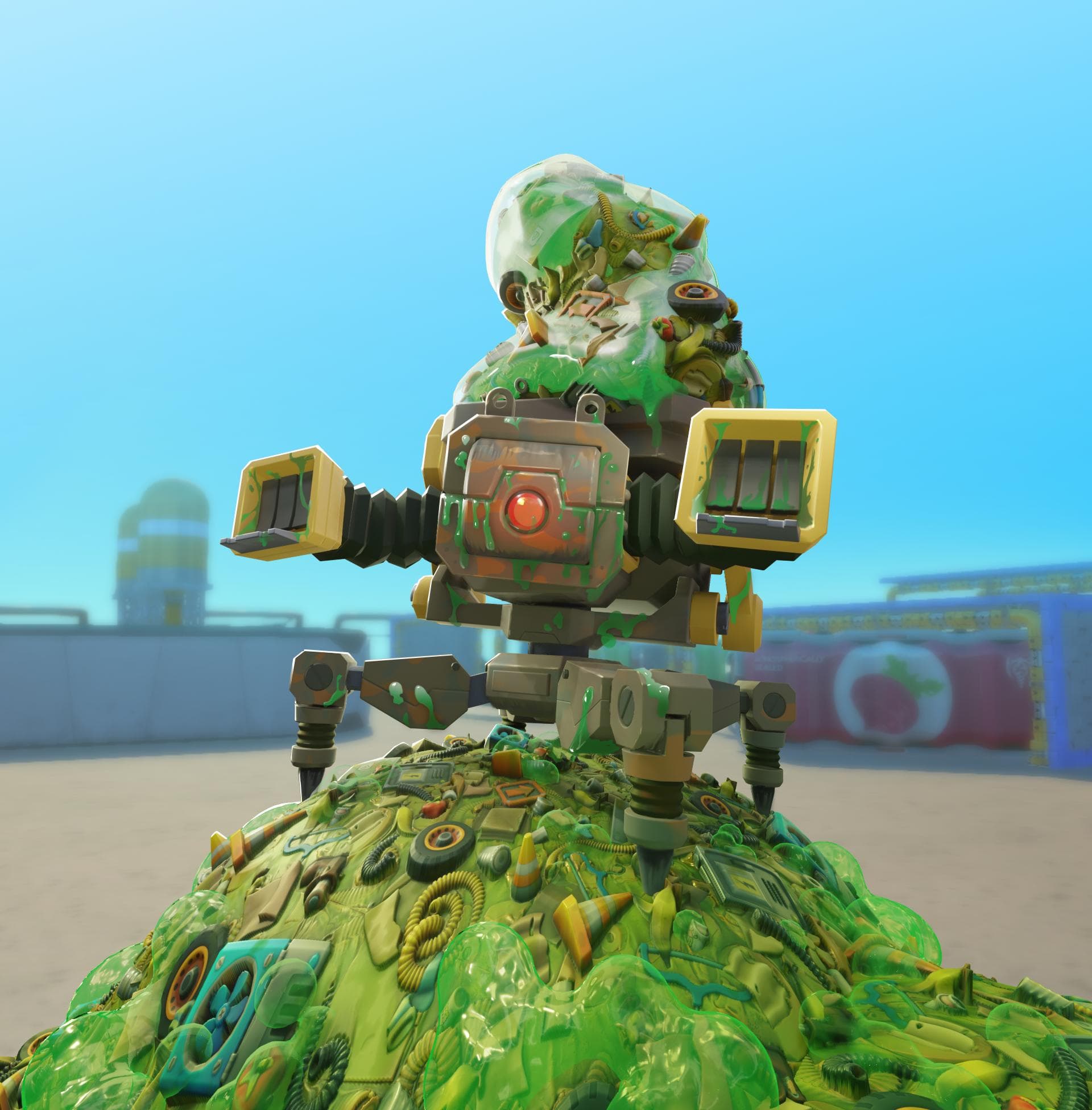
- Encounter type
- Two scripted boss fights
- Health per phase
- 30 before player-count multiplier
- Core recovery
- 5 core hits
- Stun time
- 3 seconds
- Explosion radius
- 30 units
- Damage window
- Eye-open patterns
- Scaling
- Tracks maximum encountered player count
Trashbot recipes and properties
- Attack model
- Pattern sequences, shockwaves, and projectile walls
- Weak-point rhythm
- Eye damage → exposed core → recovery
- Fight persistence
- Arena manager controls stages and patterns
- Preparation
- Mobility, clear sight, and repeatable dodge lanes
Trashbot fight rhythm
| State | Player objective |
|---|---|
| Eye closed | Read the pattern and preserve movement space |
| Eye open | Apply the phase damage |
| Stunned / core exposed | Land the five required core hits |
| Recovery | Reset position before the next pattern |
Health per phase is multiplied for the maximum player count encountered by the fight.
This Is Not a Farmbot With More Health
Trashbot damage is controlled by the current attack pattern and eye state. Firing continuously at a closed weak point wastes ammunition and blocks your view of the next shockwave or projectile wall.
Thirty Health Is Per Phase, Not the Whole Fight
Both fight configurations use thirty health per phase before multiplayer scaling. The arena records the highest player count it has encountered, so a group fight does not collapse back to a solo health expectation when someone leaves the immediate area.
Five Core Hits Complete the Recovery Window
After the damage phase opens the core opportunity, the fight expects five core hits before recovery. Assign a clean shooting lane instead of stacking every player on the same dodge path.
- Enter with a separate movement lane and firing lane.
- Reload before the eye-open window.
- Move away from the 30-unit explosion area when the pattern demands it.
Bring a Transport Build, Not a Boss-Fighting Vehicle
Use a scout or hauler to reach the arena and stage supplies, then park outside the projectile space. The encounter is built around player movement and weak-point timing; a large vehicle becomes an obstacle unless the arena specifically calls for it.